
A custom home or a full remodel buys the same list every time: sofas and beds, a kitchen, closets, bathrooms, lighting, doors, stone, outdoor furniture. In the US that list is priced through three or four layers of distribution. In Guangdong it is priced at the factory gate, most of it is made within an hour's drive of one city, and all of it, flooring, doors, stone and curtains included, is bought on a single trip. This guide, written by Union Delta, an Atlanta-based China sourcing company with a consolidation warehouse in Guangdong, is for US home builders, remodelers and interior designers who want to buy a whole house there without learning the hard way: where each category is made, what it costs ex-works, which categories US duties and antidumping orders take off the table, and why a full container is the shipment to plan for.
- Furniture, kitchens, lighting, bathrooms, doors, stone and curtains for a US house are all bought on one five-to-seven-day trip around Foshan, Guangdong, and a whole house ships in one 40-foot high-cube container of about 68 cubic metres.
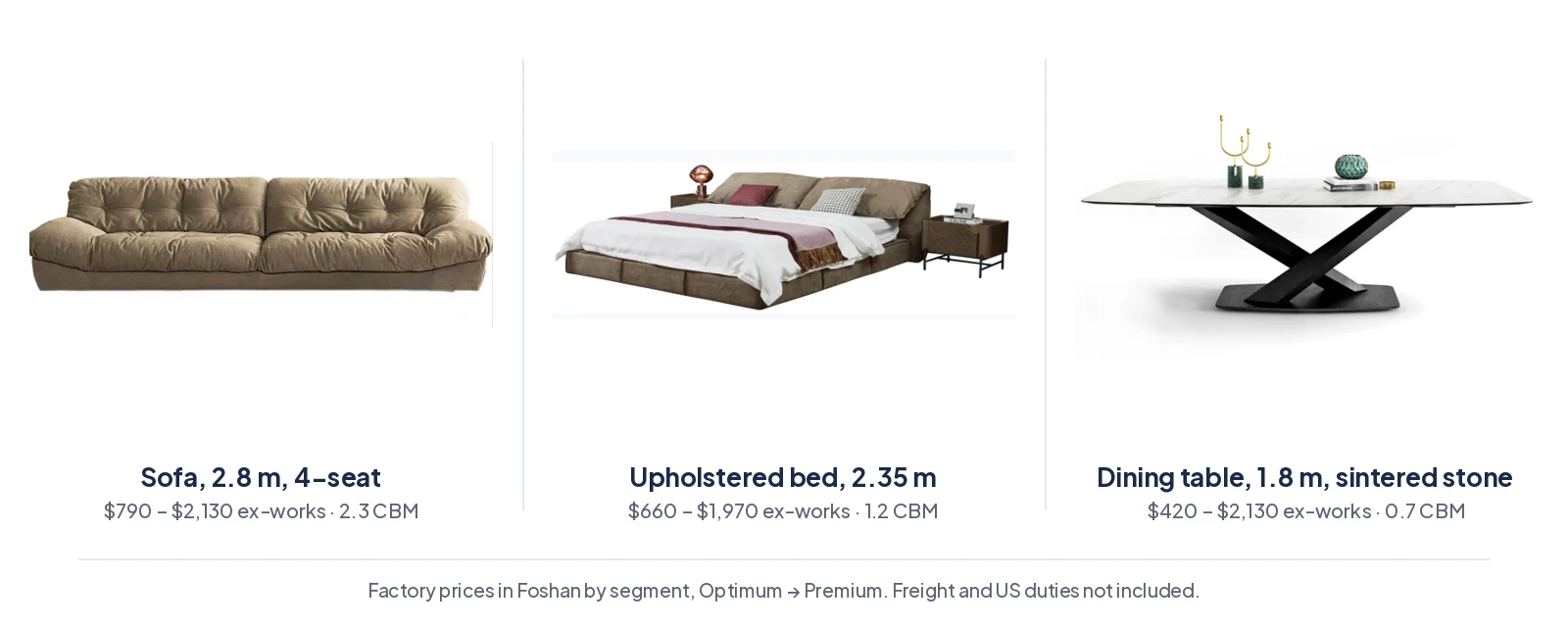
- Factory prices in Foshan in October 2026 run $790–2,130 for a 2.8 m sofa and $660–1,970 for a king upholstered bed, ex-works, depending on tier.
- Furniture from China pays 37.5% US duty, or 62.5% with a wooden frame; lighting and sanitary ware pay 41–45%.
- Five categories cannot be imported from China to the US because of antidumping orders: ceramic tile, quartz surfaces, wooden kitchen cabinets, wooden bedroom case goods and mattresses.
- A full 40'HQ to the US West Coast costs $11,000–14,000 door to door excluding duties, about half the per-cube cost of LCL; smaller orders can still work by LCL after a calculation.
- Trip to delivery takes three to four months; Union Delta's fee is the standard 5–8% sourcing commission and the catalogues are free on request.
In this guide: why a whole house · where it is made · the catalogues · factory prices by tier · US duties and no-go categories · LCL vs full container · the five-day trip · project size · FAQ
Why buy a whole house in China, and not one sofa
The arithmetic only works at project scale. Between the factory price and your client's door sit ocean freight, US customs, duties that currently run from 37.5% upward on furniture from China, crating, and delivery. On a single sofa those fixed costs eat the saving. On a house, with a container that leaves Guangdong sealed and is opened on the job site, they spread across 60 to 70 cubic metres of goods and the factory price wins by a wide margin.
Two things make the trip worth a designer's week. First, range: the Lecong furniture district in Foshan alone has several million square metres of showroom, and the production towns behind it make to order, so a drawing becomes a piece of furniture in 30 to 60 days. Second, control: you pick the frame, the foam density, the fabric, the stone and the hardware yourself, at the price tier your client is actually paying for, instead of taking what a US showroom chose to stock.
Where furniture, kitchens, lighting and finishes are made in China: Foshan, Guangzhou, Zhongshan
Furniture is made in Foshan (Lecong sells, Longjiang produces), custom kitchens and closets in Guangzhou and Foshan, lighting in Zhongshan's Guzhen town, sanitary ware in Chaozhou and Kaiping, stone in Shuitou and Yunfu, and all of it is bought from showrooms within an hour of Foshan. Chinese manufacturing is organised by town, not by company. Each category below has one place where the factories, the showrooms and the component suppliers sit together, and the prices are lowest there. Every category in this table is bought on one trip: the furniture, kitchen, lighting and sanitary clusters sit within an hour of Foshan, and the production towns further out (flooring, doors, stone, fabric) keep showrooms and stock in Foshan's building-material markets. You see and sign off everything in one week; the goods then travel from wherever they are made to our warehouse in Guangdong.
| Category | Cluster | What is there | From Foshan |
|---|---|---|---|
| Furniture | Foshan: Lecong (trade) and Longjiang (production), Shunde district | A 10 km strip of showrooms from Lanshi Bridge to Longjiang Bridge: Louvre (380,000 m², 2,000+ brands), Sunlink, Red Star Macalline. Behind it, 7,000+ factories in Longjiang making sofas, beds, dining, case goods and mattresses to order. | Base |
| Custom kitchens and closets | Guangzhou and Foshan | Home of China's largest custom-cabinetry makers (Oppein in Baiyun, Sofeyia in Zengcheng) and hundreds of smaller whole-house customisation factories. Aluminium-frame and stainless kitchens are a Foshan speciality. | 30–60 min |
| Lighting | Zhongshan: Guzhen town | "Lighting Capital of China": over 70% of the domestic lighting market, output above 100 billion yuan a year, the Guzhen Lighting Fair every March and October. Chandeliers, architectural LED, outdoor fixtures, custom pieces. | 60–70 min |
| Tile and ceramics | Foshan: Nanzhuang and Chancheng | Foshan fires 54% of China's tile. Nanzhuang is "China Building Ceramic First Town", 2,000+ ceramics companies and 3 million m² of trading floor. Note the US antidumping order below. | 20 min |
| Sanitary ware | Chaozhou (ceramics), Kaiping Shuikou (faucets) | Chaozhou makes about 40% of China's sanitary ceramics and a third of its smart toilets. Shuikou town in Kaiping is the brass-fittings and faucet hub, with IAPMO-listed export factories. | Same trip (Foshan showrooms); 1.5 h to Kaiping factories |
| Natural stone | Shuitou, Nan'an (Fujian); Yunfu (Guangdong) | Shuitou does not quarry a single block and still handles about 60% of China's stone imports and 55% of exports, with 800+ processors. Yunfu is the Guangdong stone and quartz processing city, and Foshan's stone markets carry slabs from both; slabs are selected and tagged on the trip. | Same trip (Foshan stone markets), 2 h to Yunfu |
| Doors and windows | Made in Jiangshan (wood) and Yongkang (steel); Foshan Nanhai Dali (aluminium); door showrooms in Foshan | One in five wooden doors in China comes from Jiangshan, Zhejiang. Yongkang is the "hardware and door capital" for steel security doors. Dali town in Nanhai is the country's largest aluminium-profile centre. Wood-door brands from Jiangshan show in Foshan; doors are chosen there and made to your schedule. | Same trip |
| Flooring | Made in Nanxun, Huzhou (Zhejiang); sold in Foshan | Nanxun is "China's wood-flooring capital", roughly 60% of the country's solid-wood flooring and 700+ mills. The mills keep showrooms and stock in Foshan's building-material markets, so flooring is chosen on the same trip and shipped to our warehouse. | Same trip |
| Curtains and fabric | Woven in Haining Xucun (Zhejiang); curtain markets and workrooms in Foshan | Haining weaves the decorative fabric, billions of metres a year. Foshan's curtain markets carry the same mills' ranges, and local workrooms sew to your window schedule, so textiles are specified on the same trip as the furniture. | Same trip |
| Hardware | Jieyang (stainless), Zhongshan Xiaolan (locks) | Jieyang holds about 30% of China's stainless-steel products market; Xiaolan is the lock and hardware export base. | 45 min (Xiaolan) |
| Outdoor furniture | Foshan and coastal Zhejiang | Powder-coated aluminium, teak, rope and synthetic-rattan collections; most Lecong showrooms carry an outdoor floor. | Base |
| Appliances | Foshan Shunde (Midea's home base) | Ranges, hoods, refrigeration. For a US house, buy these at home: 120 V, UL listing, local warranty and Section 232 duty on the full value all point the same way. | 30 min |
If your dates are flexible, line the trip up with a show. The Canton Fair's second phase (building and decorative materials, sanitary ware, furniture) ran 23–27 October 2026 in Guangzhou and comes back in late April 2027; CIFF Guangzhou, the big furniture fair, is every March; the Guzhen Lighting Fair is March and October. We covered the trade-off between fairs and factory visits in Canton Fair vs 1688 vs Alibaba.
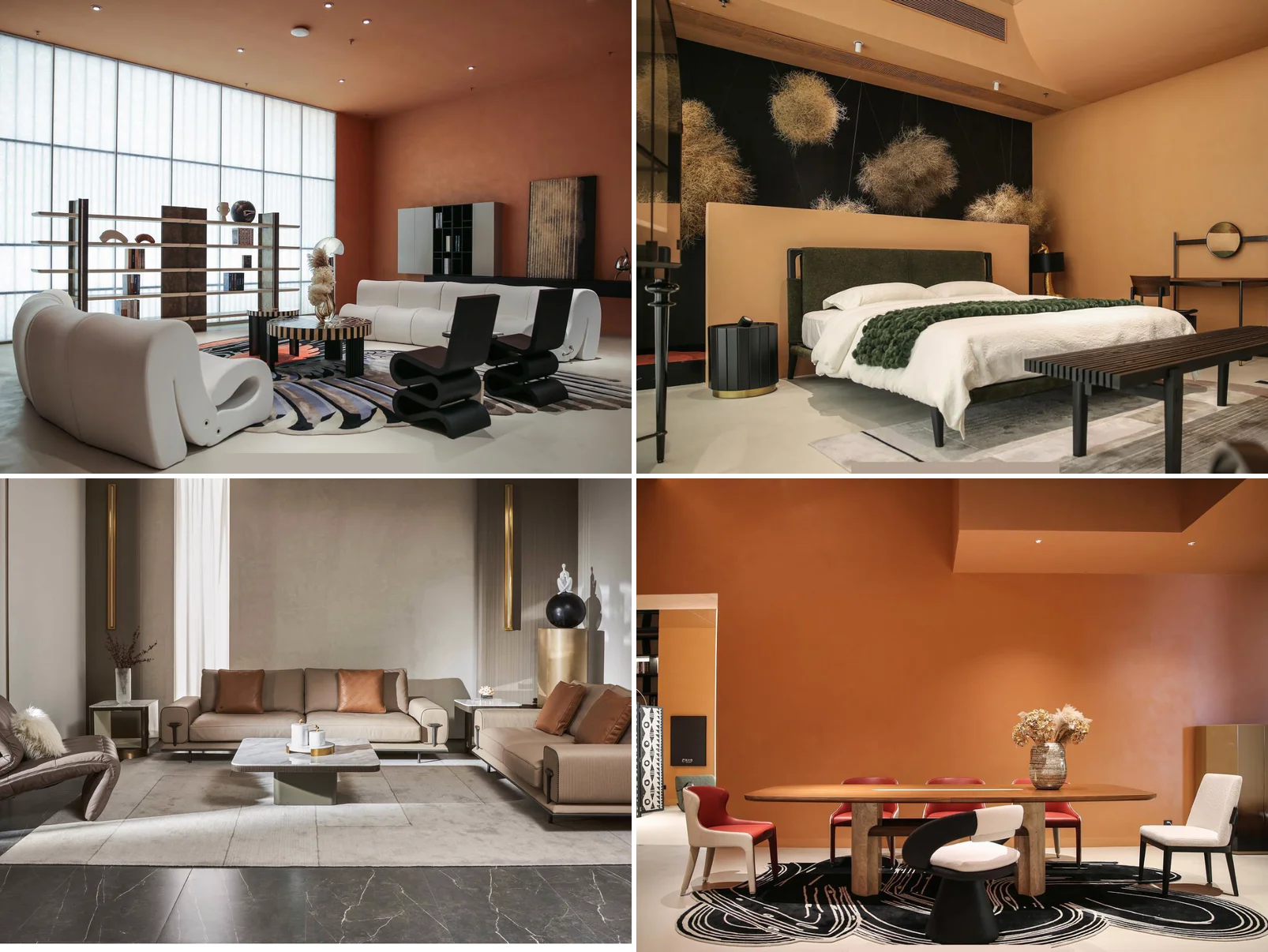
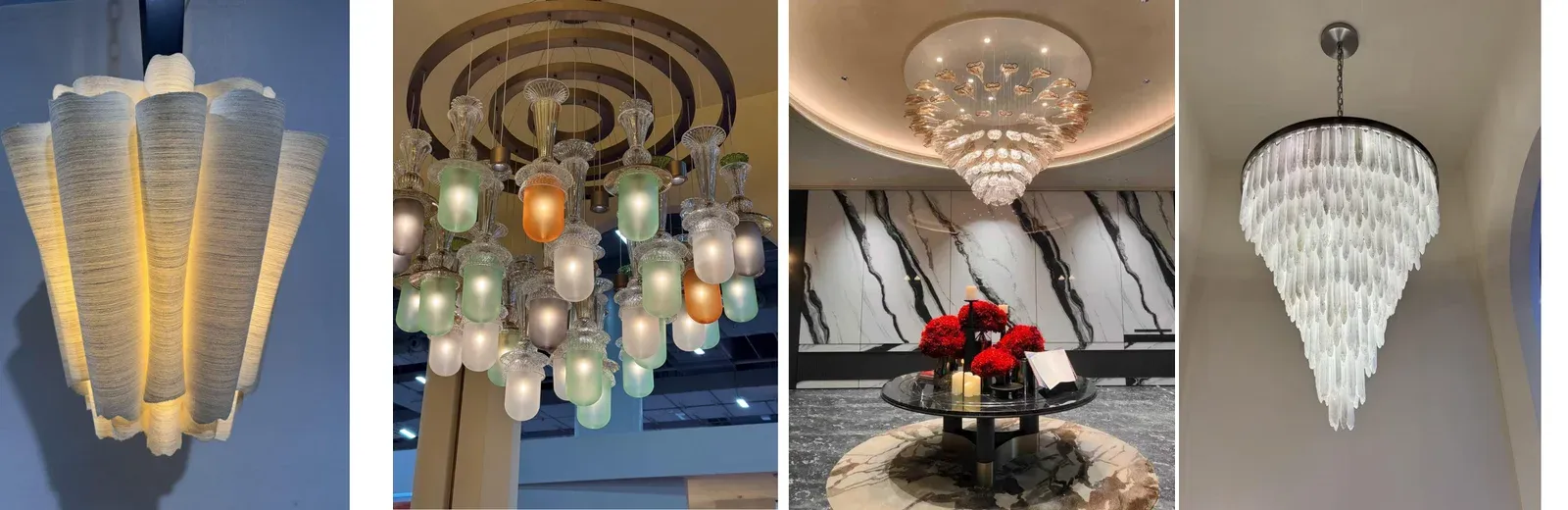
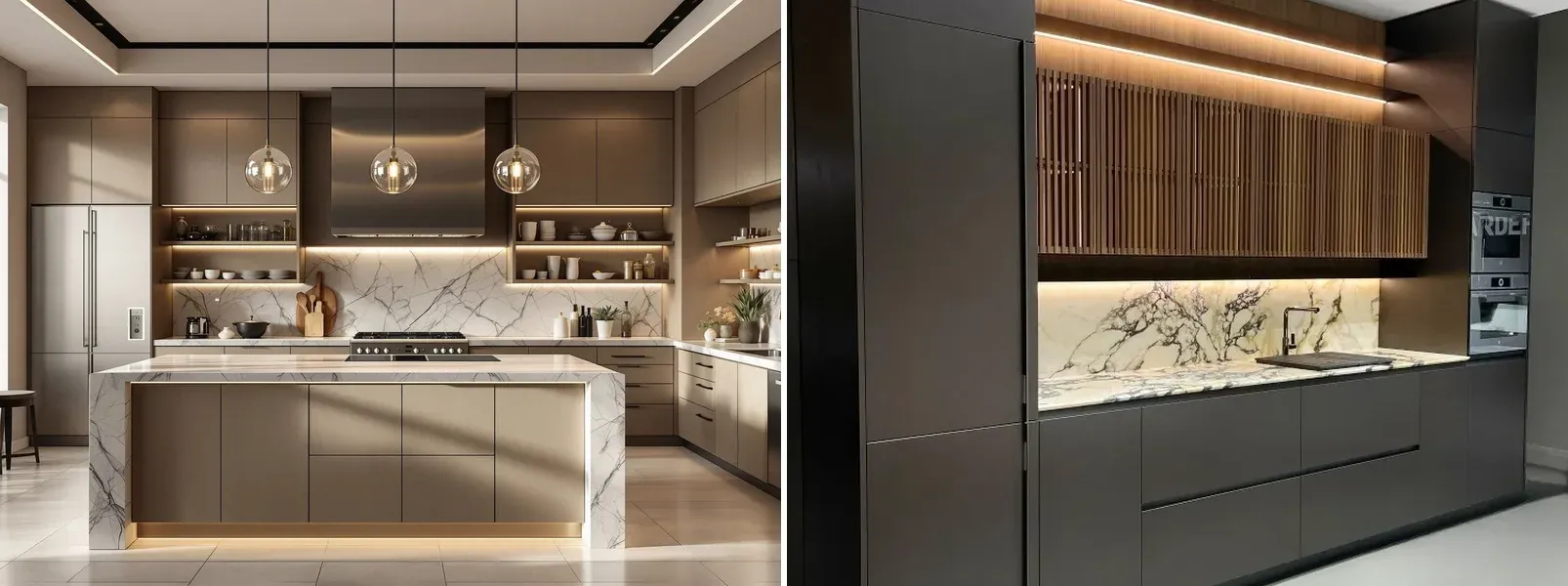
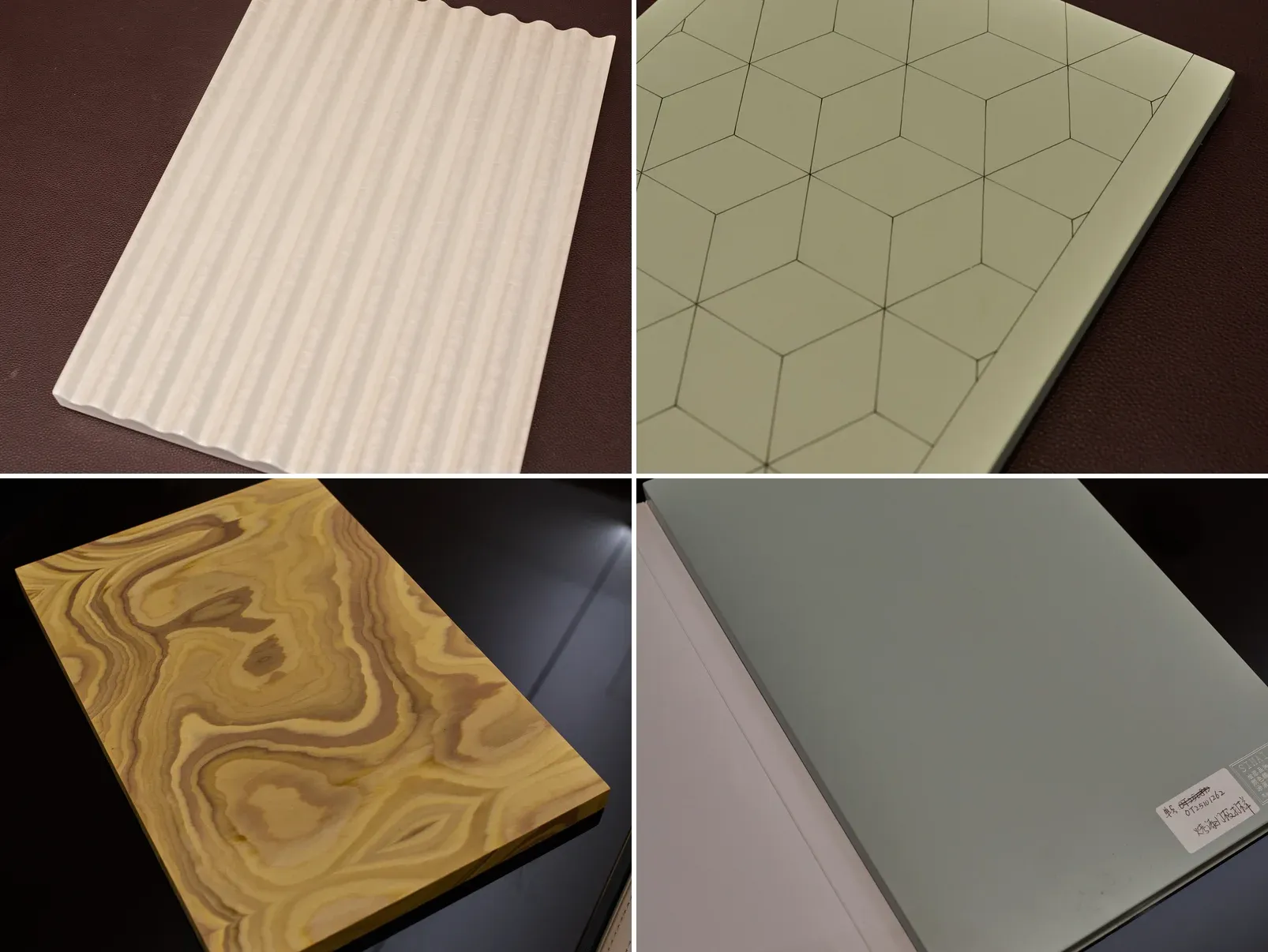
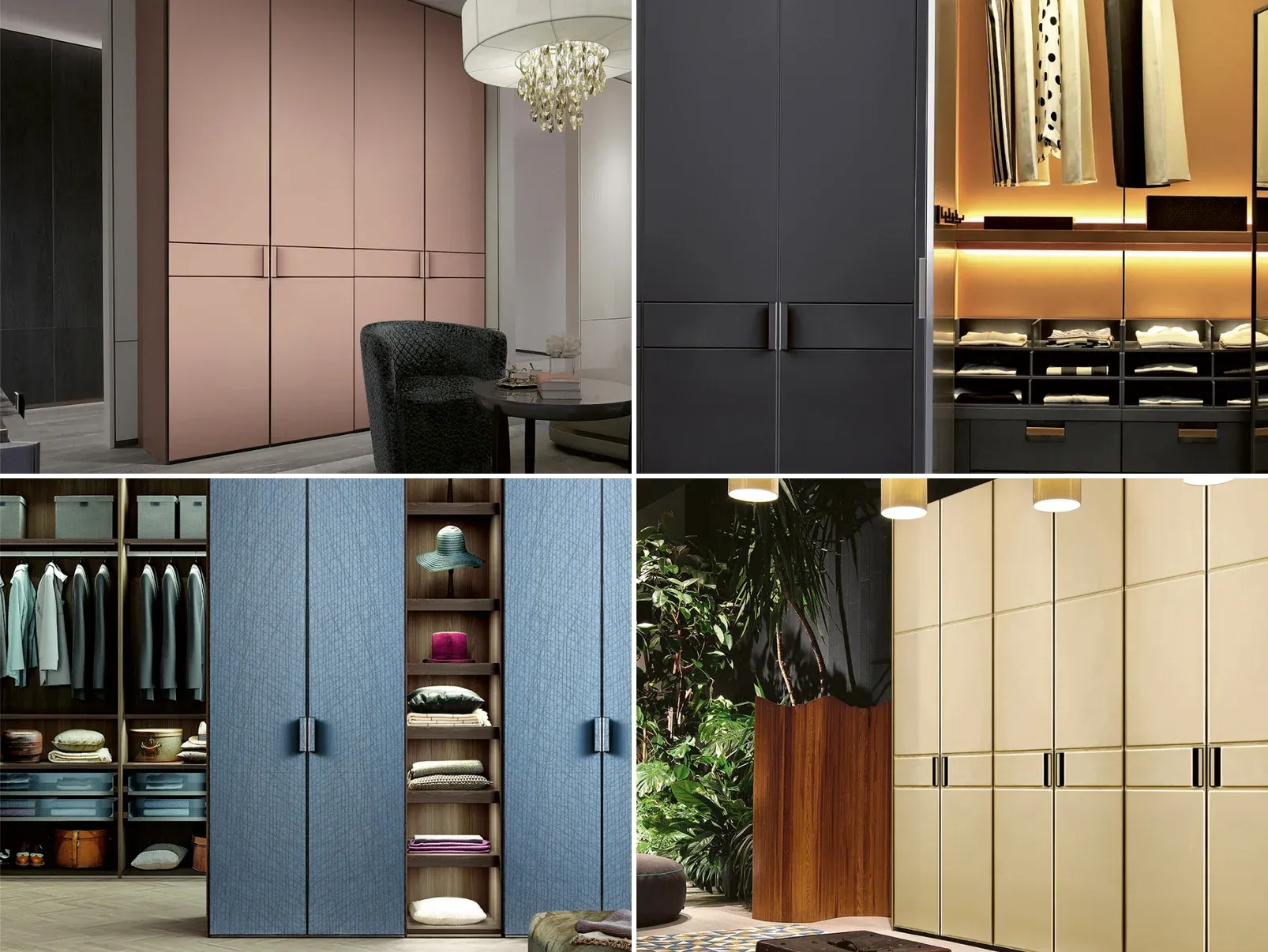
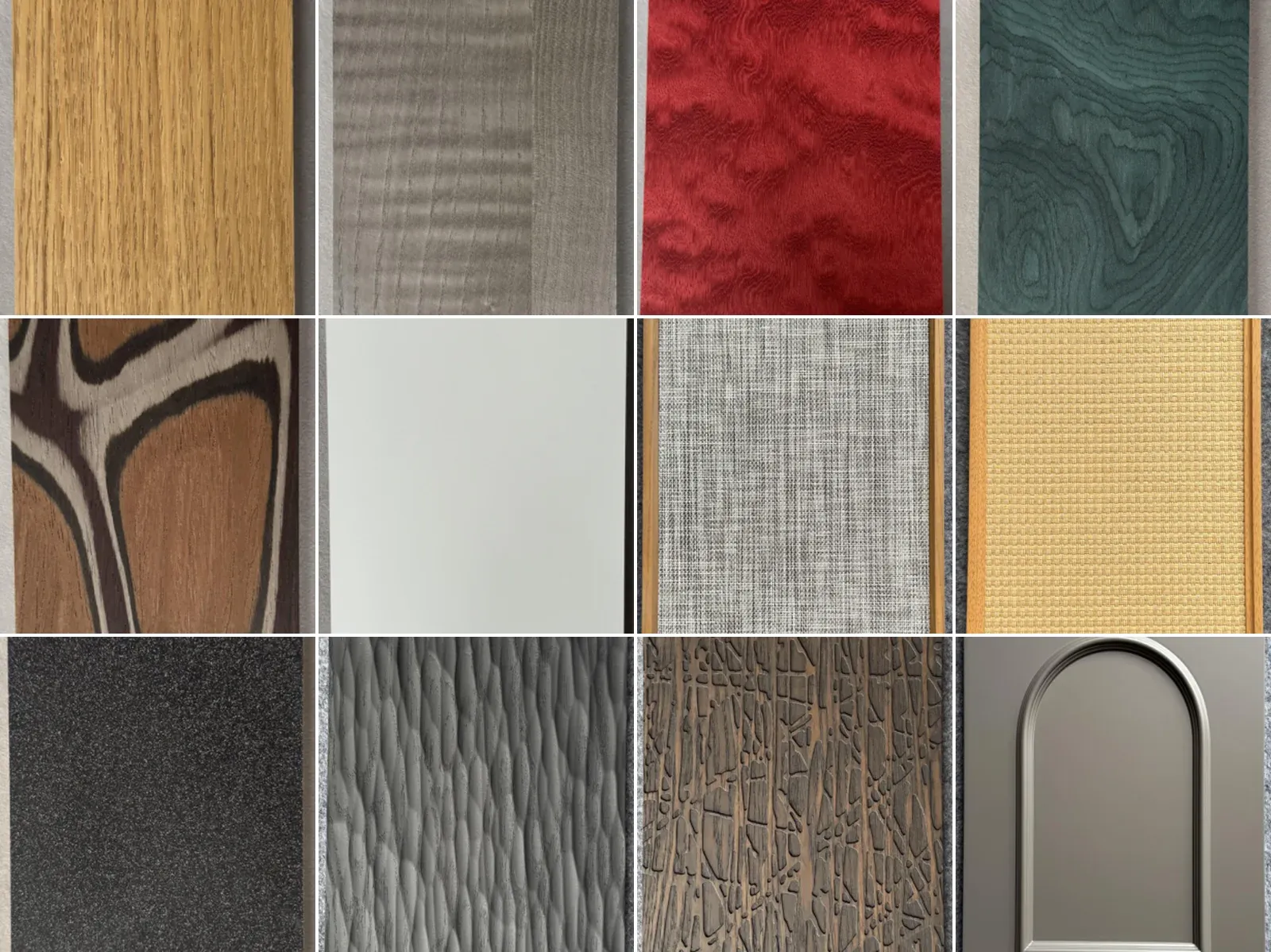
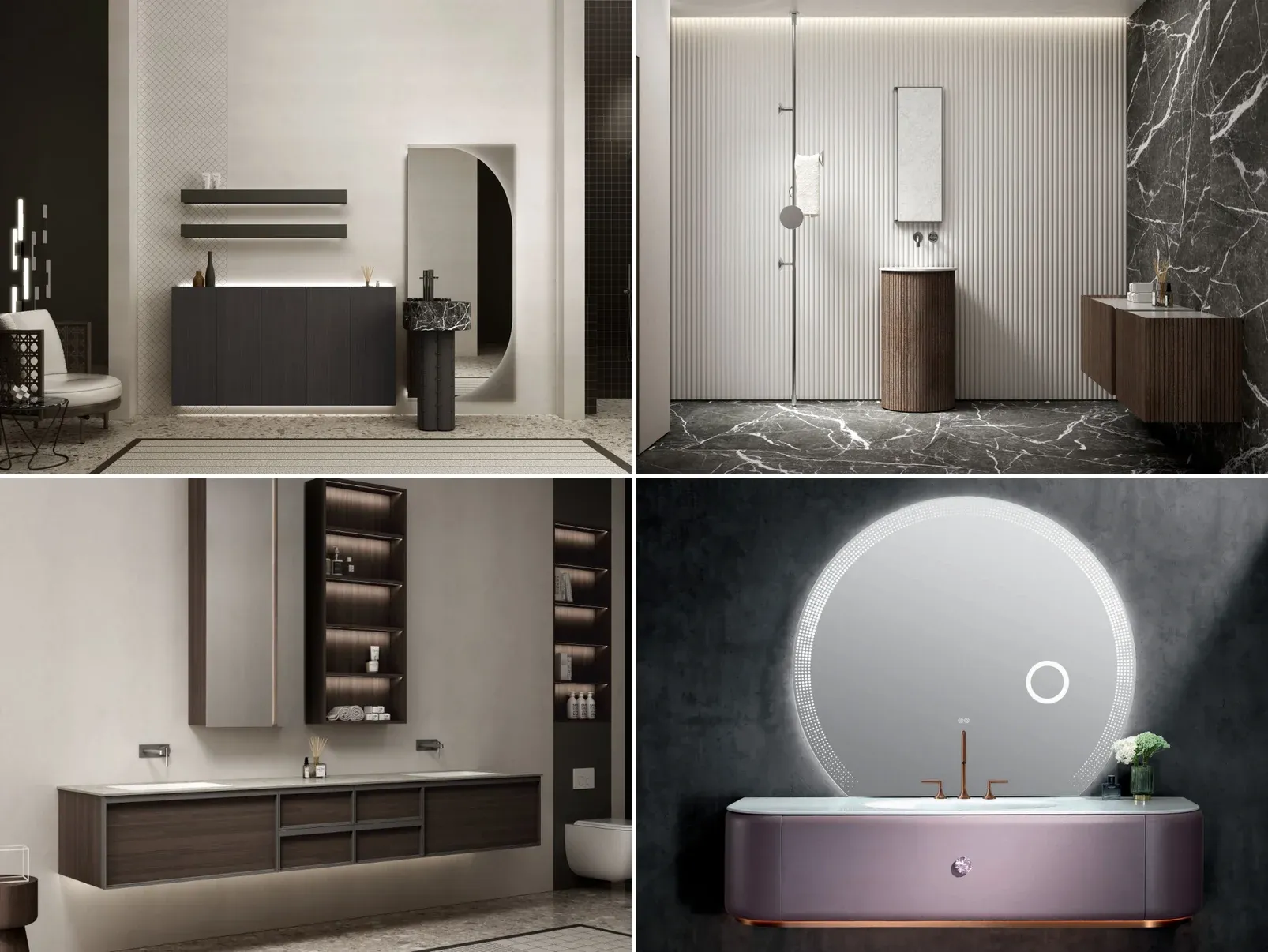
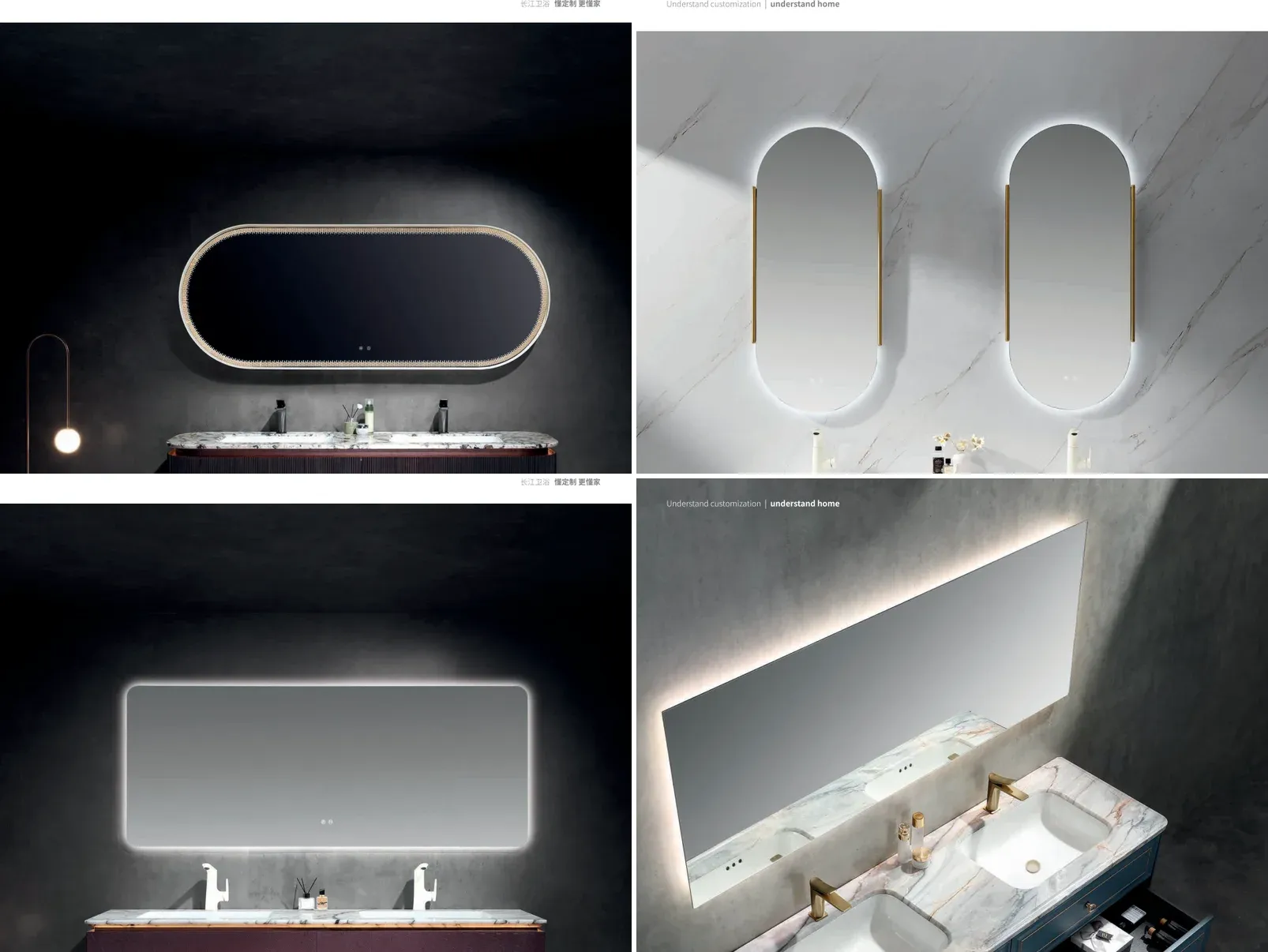
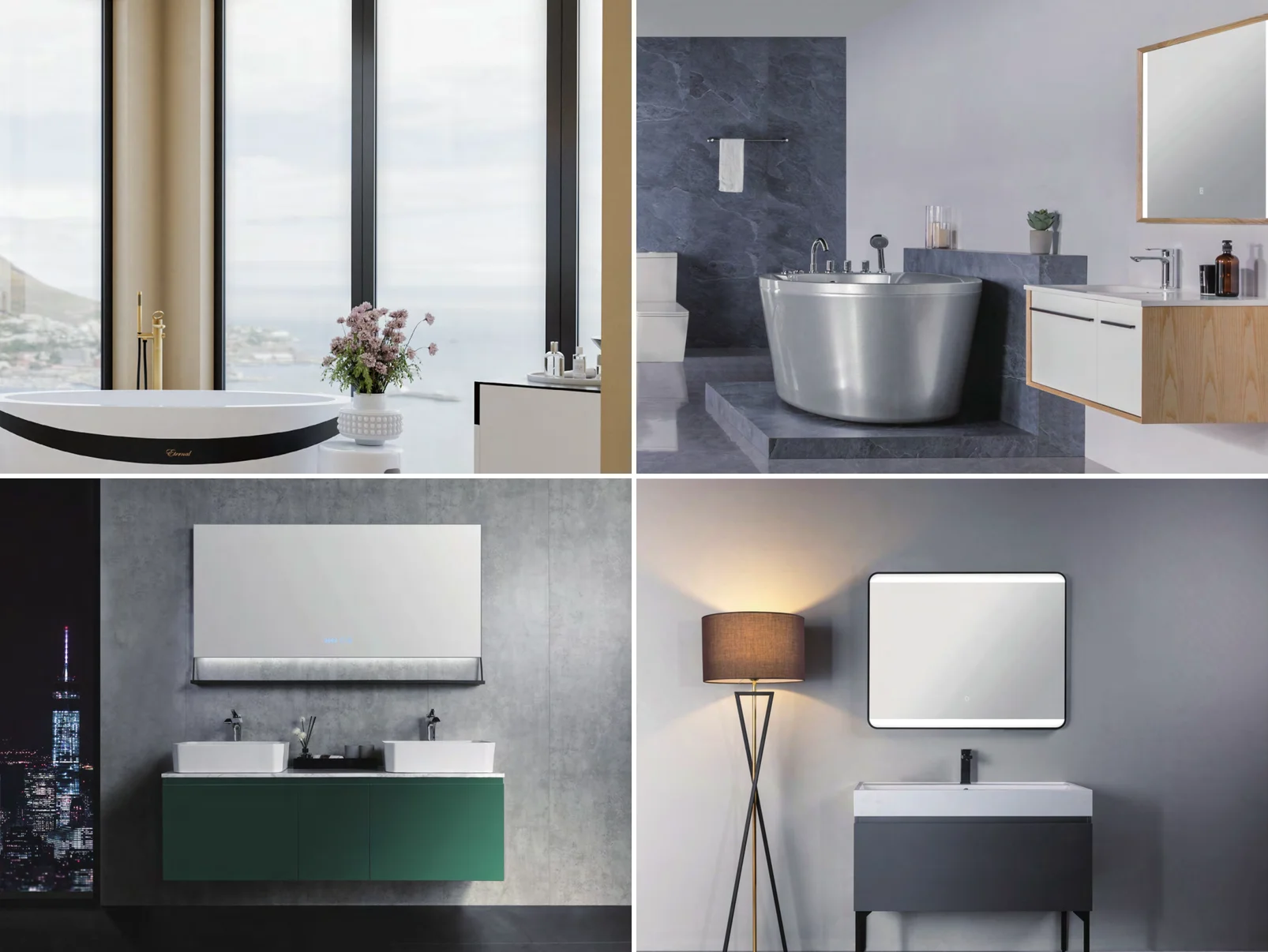
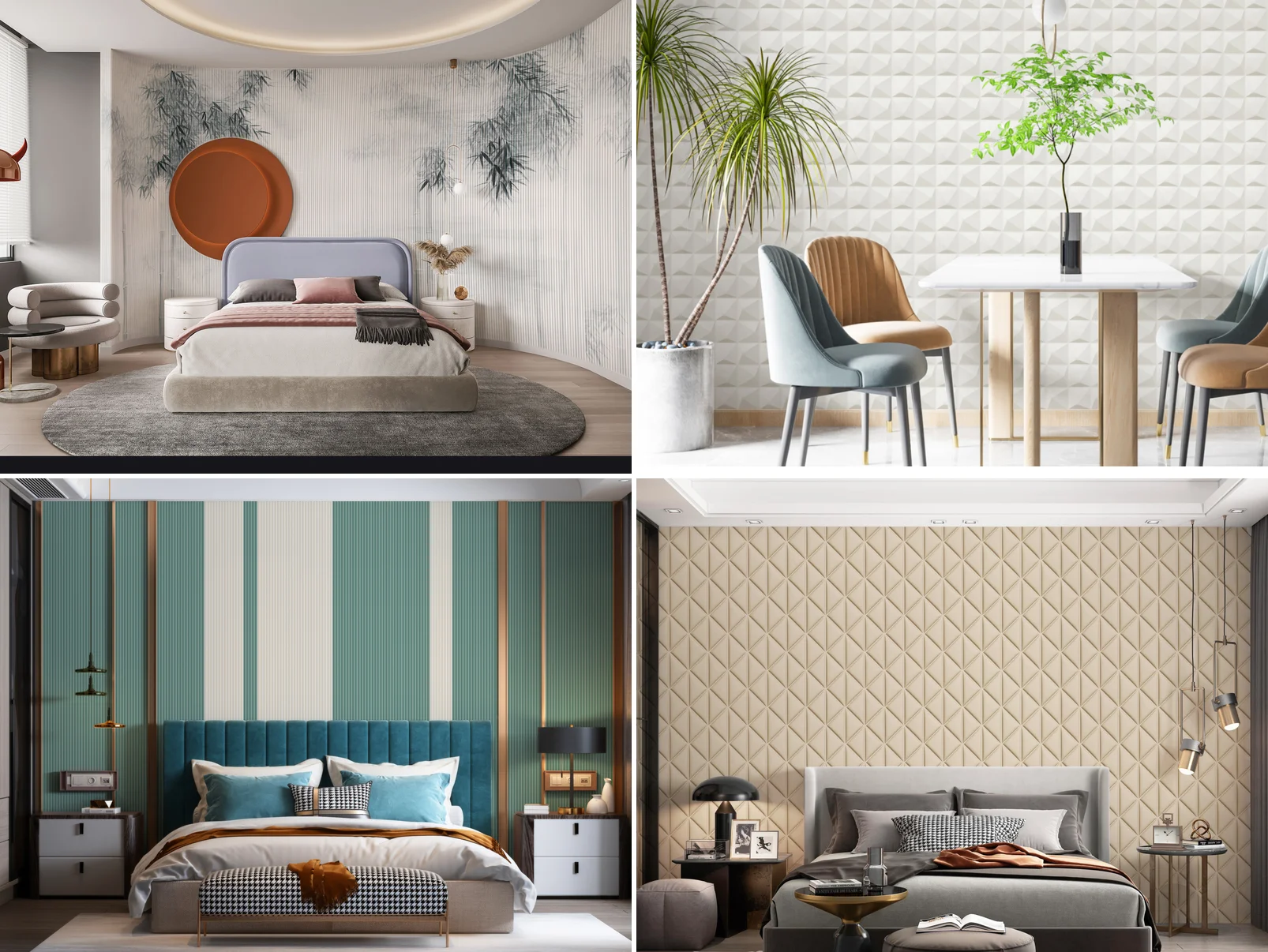
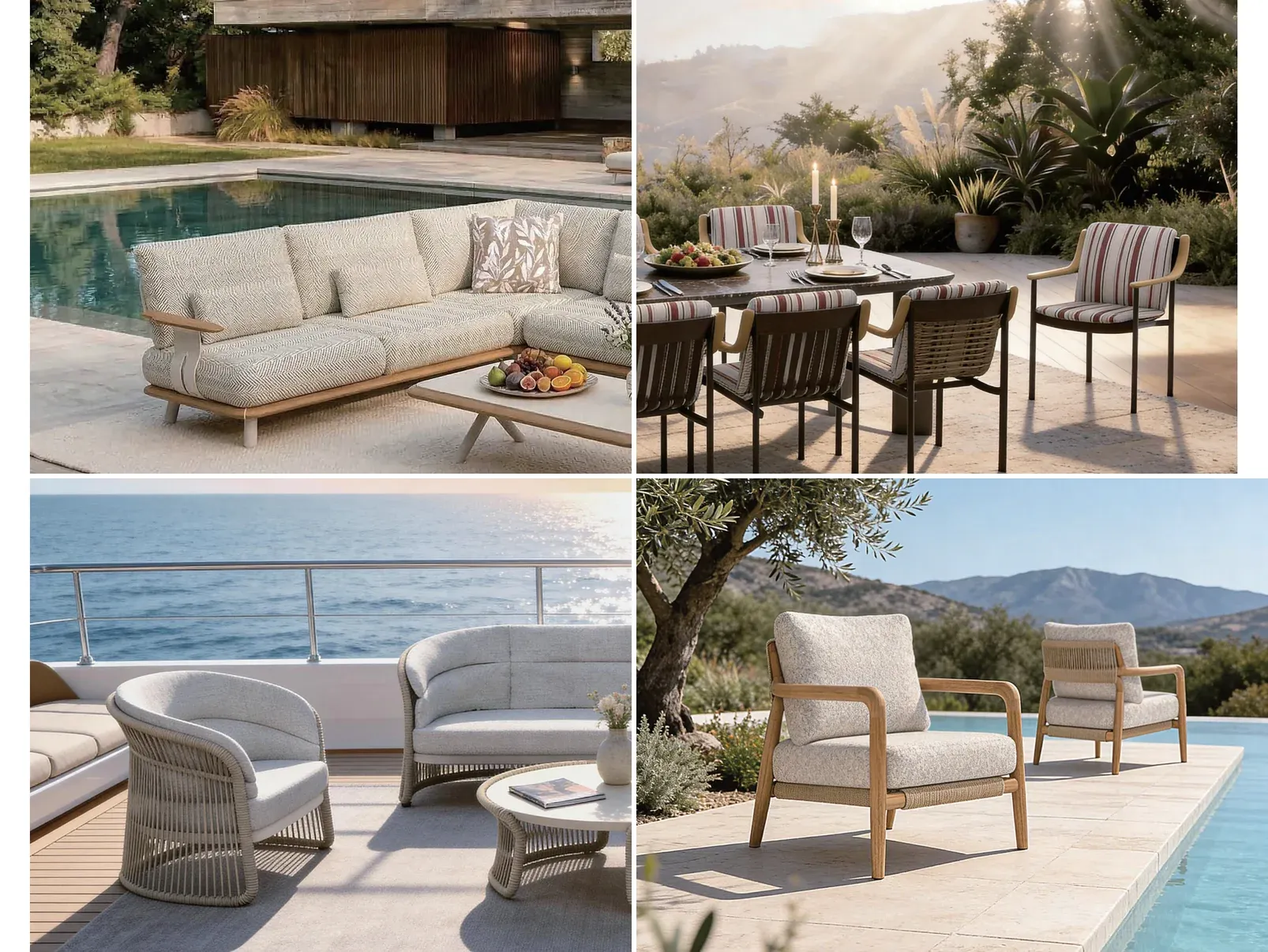
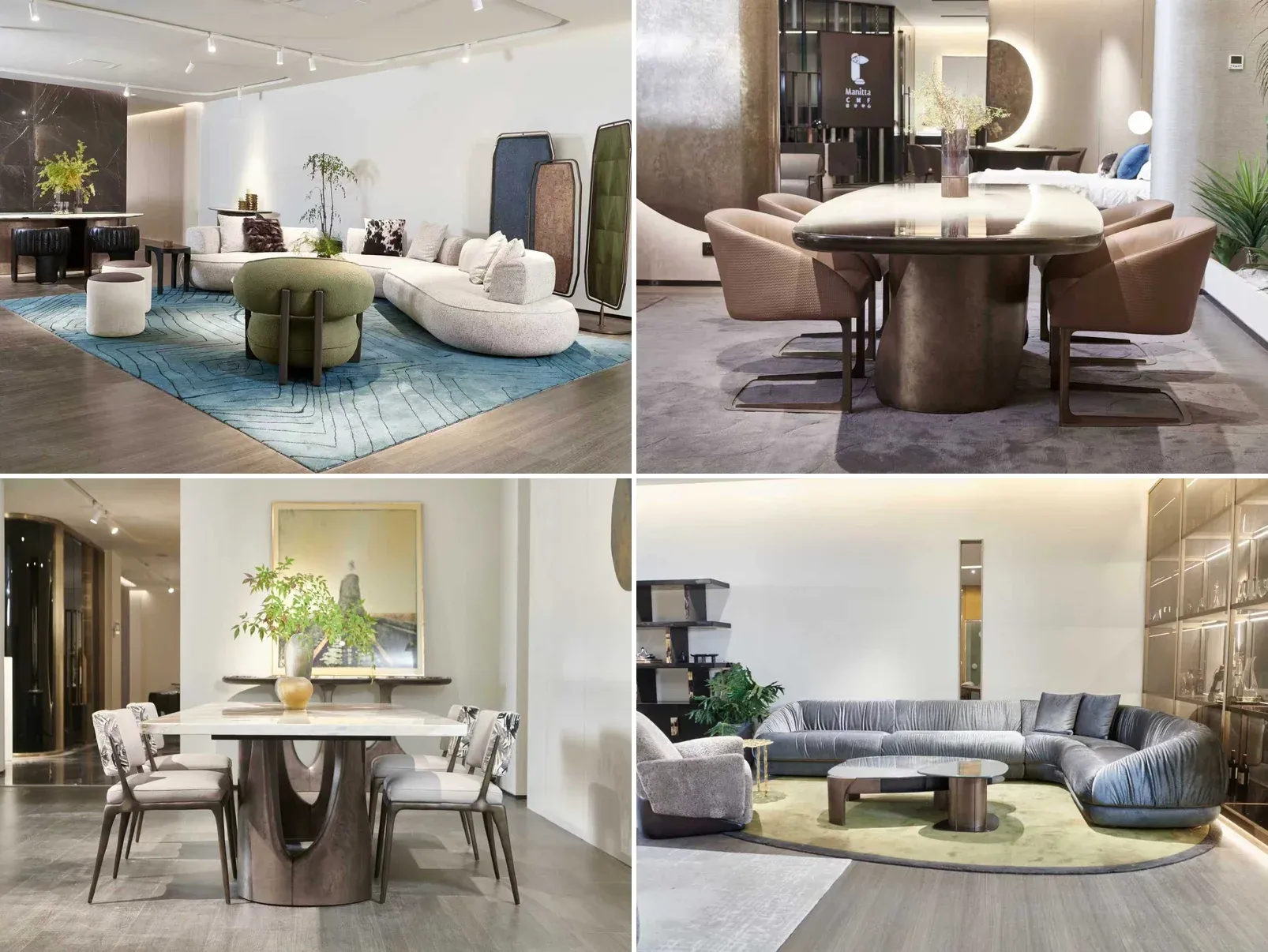
What the Foshan catalogues look like: furniture, kitchens, bathrooms, lighting, finishes
A sample of the premium and upper mid-range tiers from the catalogue library we work from, every category of it bought on the same trip and shipped in the same container.

Furniture prices in Foshan by tier (ex-works, October 2026)
The useful way to think about Foshan pricing is in tiers, not in brands. The same four-seat sofa exists in a plywood-frame version with 85-yuan fabric and in a solid-ash-frame version with top-grain leather, and they look identical in a photograph. Below are ex-works prices from the Foshan price book we work from, 2025 showroom quotations for seven standard pieces across four tiers, converted at 6.70 yuan to the dollar. They are for the standard configuration in each tier; a different fabric, size or stone moves the number. Freight and US duties are not included.
| Piece | Optimum | Middle | Middle-up | Premium | Packed volume |
|---|---|---|---|---|---|
| Sofa, 4-seat, 2.8 m | $790 | $1,150 | $1,580 | $2,130 | 2.3 CBM |
| Upholstered bed, 2.35 m, king | $660 | $870 | $1,170 | $1,970 | 1.2 CBM |
| Lounge armchair with ottoman | $370 | $440 | $510 | $1,610 | 0.6 CBM |
| Dining chair | $170 | $235 | $370 | $670 | 0.4 CBM |
| Nightstand, stone top, metal base | $130 | $310 | $370 | $510 | 0.15 CBM |
| Dining table, 1.8 m | $420 | $1,190 | $1,350 | $2,130 | 0.7 CBM |
| Sideboard, 2.4 m | $610 | $870 | $1,140 | $1,360 | 0.9 CBM |
What moves the price between tiers: the frame (plywood, then solid larch or ash, then stainless steel), foam density and layering, fabric (synthetic at the bottom, microfibre leather in the middle, full-grain leather and bouclé at the top), the top (sintered stone at the bottom, natural marble at the top) and the hardware. For US projects we spec bedroom case goods, nightstands and dressers, in metal and stone rather than wood, for the antidumping reason explained below. A living room, dining room and three bedrooms from this table, in the mid tier, is about $12,000 ex-works and 16 cubic metres packed. The premium tier of the same list is about $25,500.
US import duties on furniture from China in 2026, and the categories antidumping orders block
This is the part most "furniture tour" offers skip, and it decides what goes in the container. As of October 2026, goods from China pay the normal US tariff plus the 25% Section 301 duty plus the 12.5% China overlay that replaced Section 122 in July. On top of that, wood products and metal products carry their own Section 232 duties, and five home categories sit under antidumping orders that make them unimportable at any price. The table is indicative; the exact rate depends on the tariff classification of each item, and it is part of every quote we send. The category-by-category table for other goods is in our 2026 tariff rates guide.
| Category | Duty stack | Verdict |
|---|---|---|
| Upholstered sofas and chairs, wooden frame | 0% + 25% (301) + 12.5% + 25% (Section 232 wood) ≈ 62.5%; the 232 rate is scheduled to rise to 30% on 1 January 2027 | Buy. Still a third of the US price at the mid tier. |
| Upholstered seating, metal frame; metal, stone and glass tables, consoles, metal beds | 0% + 25% + 12.5% ≈ 37.5%. Metal furniture was removed from Section 232 in April 2026. | Buy. The best value in the container. |
| Beds, nightstands, dressers, wardrobes of wood | Antidumping order on wooden bedroom furniture since 2005; China-wide rate 216% in the August 2026 review results | No, unless the bed is fully upholstered down to the side rails (that version is excluded from the order). |
| Kitchen cabinets and bathroom vanities of wood, MDF or plywood | Antidumping and countervailing orders since 2020, plus 25% Section 232 (50% from 2027), plus 301 | No. Aluminium-frame and stainless kitchens are outside both orders at 37.5%, or we source wood cabinetry outside China (see China Plus One). |
| Ceramic and porcelain tile, including large-format slabs | Antidumping and countervailing orders, continued February 2026; slabs over 1 m² are in scope | No. |
| Quartz and engineered-stone surfaces | Antidumping and countervailing orders, continued January 2025 | No. Natural marble, granite and travertine are fine at about 42%. |
| Mattresses | Antidumping order since 2019 | No. Buy in the US. |
| Lighting fixtures and chandeliers | 4–8% + 25% (7.5% on some LED lines) + 12.5% ≈ 41–45%; no Section 232 | Buy. Fixtures must be UL or ETL listed to pass a US electrical inspection; the Guzhen export factories hold the listings, the domestic ones do not. |
| Faucets, showers, toilets, basins | 4–6% + 25% + 12.5% ≈ 42–44%; faucets are not a Section 232 copper derivative | Buy from cUPC and NSF/ANSI 61 and 372 listed factories only; the plumbing inspector checks the mark. |
| Wooden interior doors | 4.8% + 25% + 12.5% ≈ 42% | Buy. Steel and aluminium doors and windows are at 50% Section 232 on full value plus 301: leave them. |
| Door hardware, hinges, handles | 25% Section 232 (full value) + 25% + 12.5% + base ≈ 65–68% | Small line in the budget; buy with the doors so the finishes match. |
| Wall panels, curtains, rugs, decor | Base + 25% + 12.5% ≈ 44–50% | Buy; light and cheap to ship. |
Three compliance points travel with the goods. Upholstered furniture sold in the US must meet the federal flammability standard (16 CFR 1640, the old California TB 117-2013) and carry its label. Composite wood in furniture, doors and closets must be CARB Phase 2 / TSCA Title VI certified and labelled. Wood furniture and doors need a Lacey Act plant declaration naming species and country of harvest. All three are routine for export-grade factories and unknown to domestic-only ones, which is one more reason to buy with someone who knows which is which.
Shipping furniture from China to the USA: LCL vs full container (2026 costs)
Furniture is light and bulky. A four-seat sofa weighs 80 kg and occupies 2.3 cubic metres, a density of 35 kg per cubic metre. Less-than-container (LCL) freight charges you for volume, not weight, and the express consolidation lines that quote by the kilo bill a cubic metre as 167 kg, so that sofa is charged as if it weighed 384 kg. A 2.8 m sofa also exceeds the 170 cm length limit on most of those lines, so it cannot go that way at all. On top of the per-cube rate come fixed charges per shipment for customs entry, ISF and delivery, and the goods are handled at a consolidation warehouse in China and again at a deconsolidation warehouse in the US. Each handling is a scratch on a lacquered sideboard.
A full 40-foot high-cube is the opposite in every respect: one flat price, loaded and sealed at our warehouse, opened at your site. The numbers from our calculator for that seven-piece set above, 16 cubic metres, at October 2026 rates:
| Shipment | How it is priced | Cost for the 16 CBM furniture set | Cost per CBM |
|---|---|---|---|
| LCL (groupage) | $280–400 per CBM + $400–700 fixed per shipment; two extra handlings; 40–50 days | $4,800–7,000 | $300–440 |
| 40'HQ full container | $11,000–14,000 flat to a West Coast address (East Coast $14,000–17,000); sealed; 30–40 days to port | $2,500–3,200 as a share of a full box | $160–210 |
The same set ships for half the cost per cube in a container. That does not make LCL useless. For a designer's first project, a single apartment or an order of 8–12 cubic metres, groupage is often still well ahead of US retail: a mid-tier living and dining room with its lighting, about 10 cubic metres and $8,000 ex-works, lands at roughly $14,000–18,000 after LCL freight and duty, against $25,000 or more for comparable pieces bought at home. It needs a line-by-line calculation rather than a rule of thumb, because the fixed charges and the volumetric billing bite harder as the order gets smaller, so we run the LCL number and the container number side by side before you commit. The per-cube economics do not change, though: a full container is the cheapest and the safest way to move a house, and the set above fills only a quarter of one. The rest of the house fills it:
- Furniture for living, dining, bedrooms, study: 15–25 CBM.
- Closets, bathroom cabinets, aluminium-frame kitchen: 8–15 CBM, flat-packed modules.
- Lighting, crated chandeliers included: 3–6 CBM.
- Sanitary ware, toilets, basins, tubs, faucets: 3–5 CBM.
- Doors, 15–20 interior doors with frames: 2–4 CBM.
- Natural stone, countertops and feature walls cut to template, in A-frame crates: 3–8 CBM, and most of the weight.
- Outdoor furniture: 5–10 CBM.
- Curtains, rugs, mirrors, decor: 2–4 CBM.
That is 45 to 75 cubic metres: one 40'HQ for a 3,000 to 4,500 sq ft house, two for a larger estate or a small multi-unit project. Weight is not the constraint; even with four tonnes of stone the box is well under its 26-tonne payload. Rates move weekly (Drewry's World Container Index put Shanghai to Los Angeles at about $7,900 per 40-foot box in mid-October 2026), and we price each container against the live market at booking; the method is in our shipping from China to the USA guide and current door-to-door rates in China to USA shipping rates 2026.
How a Foshan buying trip works: five days from floor plan to container
A Foshan buying trip takes five to seven days and covers every category of the house. The ideal version is simple: you or your interior designer flies in, we meet you at Guangzhou airport, and for five to seven days we drive the clusters together, showroom to factory, placing orders as we go. Everything on the list is bought on this one trip: furniture, kitchen and closets, lighting, bathrooms, doors, flooring, stone, curtains and the outdoor set. You fly home; we stay with the orders until the container is sealed.
| When | What happens |
|---|---|
| 3 weeks before | You send floor plans, elevations, mood boards and a budget by category. We send catalogues by tier for each room, pre-select showrooms and factories, set the route and book the hotel. Nothing is improvised on site. |
| Day 1–2 | Lecong showrooms (Louvre, Sunlink, Red Star) for upholstered and dining furniture, then the Longjiang factories for anything custom. Specifications are written on the spot: dimensions, frame, foam, fabric code, finish. |
| Day 3 | Kitchens and closets in Guangzhou and Foshan, sanitary ware and faucets, wood doors and hardware. |
| Day 4 | Guzhen for lighting: every fixture on the lighting schedule, plus the custom pieces. |
| Day 5 | Stone slabs selected and tagged, wall panels and textiles, then a sit-down review of every order and 30% deposits. Contracts are in Chinese, with the factory's company seal, in our name as the buyer. |
| Weeks 1–8 | Production: 30–45 days for standard pieces, 45–75 for custom cabinetry and stone. Progress photos from the factory floor; problems with a fabric batch or a colour drift are caught at week two, not at delivery. |
| Weeks 6–10 | Finished goods are inspected against the specification (geometry, finish, colour batch, hardware, packing), then collected to our warehouse in Guangdong and labelled by room. |
| Week 10–11 | Load plan, export crating for stone and glass, container loaded and sealed under our supervision; balance payments to factories against the inspection report. |
| Weeks 11–17 | Ocean freight, US customs entry with duties paid, delivery to the job site. Curbside by default; unloading crew and white-glove placement on request. |
Trip to delivery is three to four months for a project of standard pieces, four to five when custom kitchens, closets or stone drive the schedule. Plan the trip for the framing stage; the container arrives for finish work.
Minimum project size, and what to send us
Builders usually bring us a spec house, a model home or a multi-unit project; interior designers bring a client's whole-house list. A trip pays for itself from roughly $30,000 of purchases, and a whole house typically runs $60,000 to $200,000 ex-works depending on tier and square footage. Below that, or for a single room, we will tell you so after a free request: the categories that are blocked by antidumping orders and the fixed cost of the container do not change with the size of the order, and a project that does not fill at least half a box is better bought at home.
What we need from you to answer in a day: the floor plans, a room-by-room list of what will be bought in China, a target budget by category, and the delivery ZIP code. We come back with a budget estimate by tier, the duty stack for each category, a container plan and the dates that fit your construction schedule.